Dr Shaheen Shahid's arrest unravales white collar involvement in terrorism and increased links of women to terror outfits so far missed by intel agencies opening up a can of worms
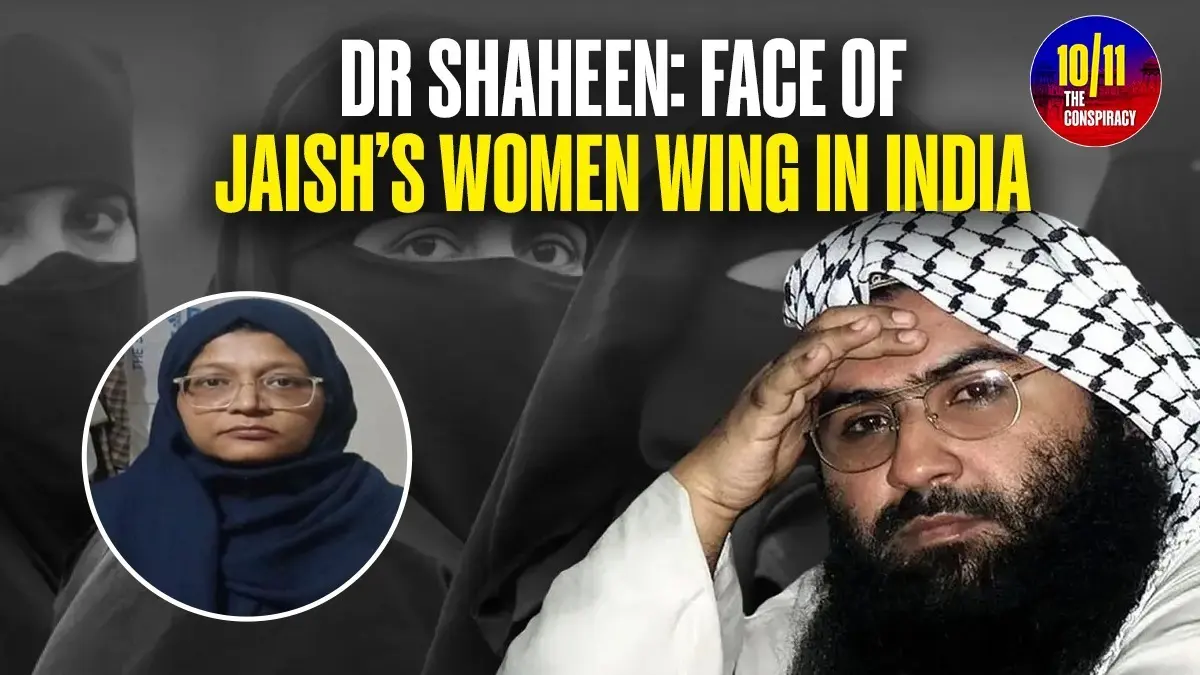
Dr Shaheen Shahids arrest reveals women's increased involvement in terror networks
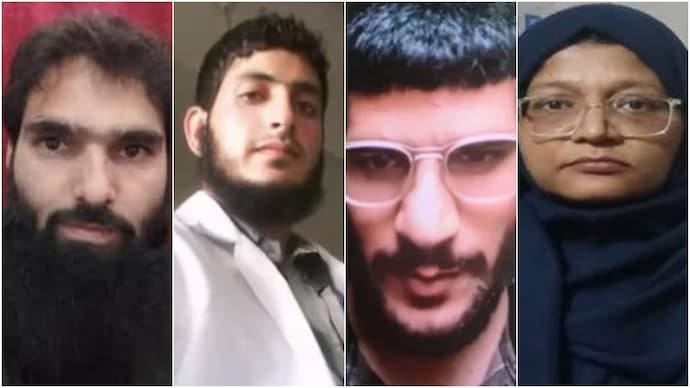
The NIA nabbed Dr Shaheen Shahid, a plastic surgeon from Lucknow, allegedly involved in the Delhi Red Fort blast unravelling increased involvement of women with deep roots in terror networks

 A Doctor, a Blast, and a Terror Network: Why NIA is Pursuing Dr Shaheen Shahid in the Red Fort Case
By TN Ashok , November 17, 2025 , New Delhi, INDIA
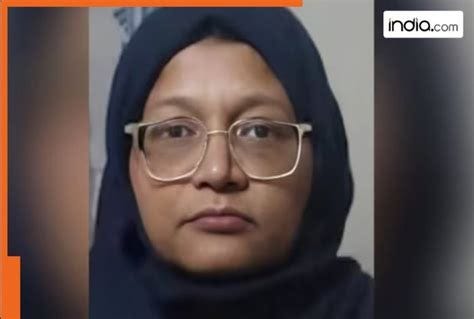
The National Investigation Agency’s decision to take over the probe into the Red Fort car blast marks a significant inflection point in India’s battle against a new kind of militant threat—educated, professionally embedded operatives who blend seamlessly into civilian life. At the centre of this widening investigation is Dr Shaheen Shahid, a 38-year-old medical professional from Lucknow whose arrest has raised uncomfortable questions about how a “white-collar terror ecosystem” may be quietly embedding itself in Indian institutions.

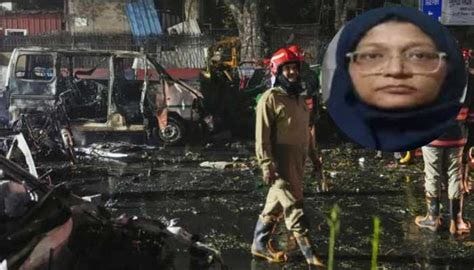
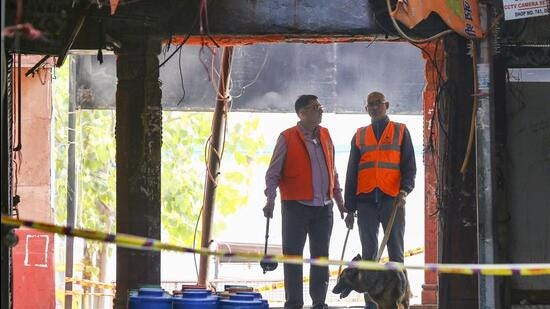
The November 10 explosion, triggered in a slow-moving vehicle at a traffic signal near the Red Fort Metro Station, killed at least 13 people and gutted several cars. Initial forensic assessments pointed to military-grade explosives—a finding that immediately elevated the blast from a localised criminal act to a high-risk national-security incident. Hours later, the Ministry of Home Affairs transferred the case to the NIA. By the next morning, Delhi Police and anti-terror agencies in three states were coordinating raids targeting an emerging “medical-academic terror ring.”
The name that surfaced repeatedly: Dr Shaheen Shahid.
A Promising Medical Career That Went Off-Track
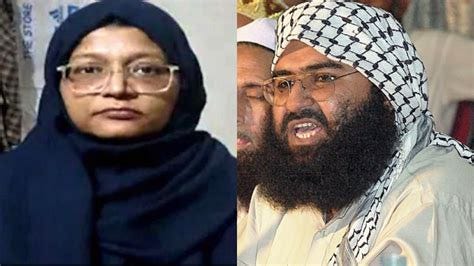
Shahid’s early career revealed no outward signs of radicalisation. A native of Lucknow’s Lal Bagh area and daughter of Saeed Ansari, she cleared the Public Service Commission examinations and secured a faculty position at Kanpur’s prestigious Ganesh Shankar Vidyarthi Medical College. Colleagues recall her as “disciplined, quiet, academically oriented.”
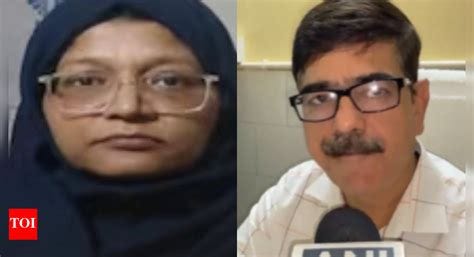
Yet in 2013, she abruptly vanished from the institution—without notice, forwarding address, or explanation. The disappearance triggered administrative proceedings that culminated in her dismissal in 2021.
Investigators now believe this unaccounted period may have been decisive. Between 2013 and 2015, Shahid married a man named Zafar Hayat, from whom she later divorced. The NIA is probing whether this period marked her introduction into extremist circuits and whether her abrupt exit from the medical college coincided with recruitment efforts by Pakistan-backed organisations.
The Faridabad Connection: A Terror Module Hiding in Plain Sight
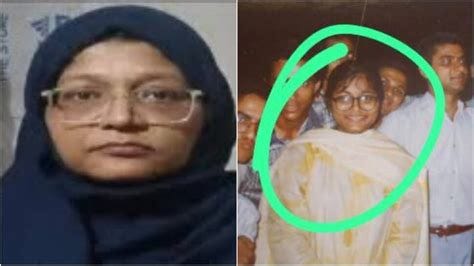
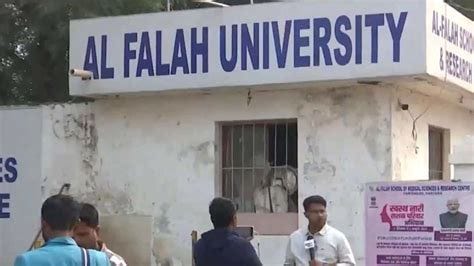
Shahid re-emerged in professional circles in Faridabad, where her ties with Al-Falah University and its medical wing placed her among a cluster of academics and physicians. Among them was Dr Muzammil Ahmad Ganaie, also known as Musaib, a faculty member from Pulwama who investigators allege helped set up a JeM recruitment and logistics cell across Haryana and Uttar Pradesh.
The unraveling of this module began with the seizure of 2,900 kilos of explosives—including 350 kilos of ammonium nitrate—from Ganaie on Sunday. The scale of the haul stunned investigators. A module possessing that quantity of explosives is not an isolated sleeper cell—it is operational. And it is preparing for multiple coordinated strikes.
Ganaie’s arrest led officers to Shahid, whom they believe functioned as a facilitator, recruiter, and courier for the women’s wing of Jaish-e-Mohammed (JeM): the Jamaat ul-Mominaat, created in October and headed by Sadia Azhar, sister of Masood Azhar.
According to investigators, Shahid had been tasked with helping build the organisation’s presence in northern India. The NIA suspects that she served as a “clean face”—a professionally credentialed woman capable of moving across states, institutions, and social circles without triggering suspicion.
Inside the “White-Collar Terror Ecosystem”
The agency’s use of the term “white-collar terror ecosystem” reflects a growing fear: terror groups are no longer relying solely on overground workers or radicalised youth. They are cultivating doctors, professors, and credentialed experts—individuals with access to hospitals, laboratories, supply chains, and research facilities.
Authorities believe Shahid played a role in:
Establishing safehouses using residential properties linked to her family
Acting as liaison between Ganaie’s logistics network and women recruits
Transporting or storing materials in her Haryana-registered Swift Dzire car, from which police recovered an AK Krinkov rifle, three magazines, a pistol with live rounds, empty cartridges and additional magazines
Executing financial transfers, now under forensic audit
Offering J&K-based handlers access to medical networks, potentially for moving operatives under the guise of treatment
What stands out to investigators is that she held no overt extremist profile. Her digital footprint was limited, her movements routine, her professional identity intact. “She was trained, educated, credentialed,” a senior Haryana ATS officer said. “She looked like a doctor. She worked like a doctor. That was the camouflage.”
How Intelligence Agencies Missed Her
One of the most troubling aspects of the case is how Shahid evaded detection for nearly a decade. Officials now concede three failures:
1. Fragmented Databases
Her disappearance from the Kanpur medical college in 2013 was recorded as a professional misconduct case—not a security red flag. Her subsequent employment in Faridabad passed without inter-state verification.
2. Lack of Monitoring on Academic Institutions
Universities and medical colleges have historically been low-priority surveillance zones, allowing modules like the Faridabad cell to embed themselves without scrutiny.
3. Underestimation of Women Operatives
Indian intelligence has long focused on male operatives. The rise of female facilitators linked to JeM and AGuH slipped under the radar until recent months.
Investigators now admit Shahid may have been active for years, serving as a recruiter, messenger, or asset handler under the guise of an academic.
The Red Fort Blast: Is Shahid Connected?

The central question for the NIA is whether Shahid directly contributed to the Red Fort blast.
While no conclusive link has yet been established, three elements raise suspicion:
Geographic proximity: Her network operated in Delhi-NCR; the blast occurred at a major NCR transit point.
Logistics capability: The Faridabad module possessed large quantities of explosive material.
Operational escalation: The blast came days after the seizure of 2,900 kilos of explosives—suggesting the possibility of hurried deployment by accomplices fearing imminent arrest.
Investigators emphasise that Shahid’s arrest stems from “strong prima facie evidence” linking her to the Faridabad module and to communications involving JeM’s women’s wing. Her interviews with police reportedly contained “inconsistencies and omissions.”
Raids, Recovery, and What Investigators Are Probing
Searches at her brother Dr Parvez’s residence in Faridabad yielded documents, electronic devices, and encrypted communication logs that are now undergoing forensic examination. Parvez, an assistant professor at Integral University, is under questioning but has not been detained.
Agencies are focusing on:
Encrypted chats and deleted messages possibly linking her to handlers in Pakistan
Financial statements indicating unexplained deposits or foreign remittances
Travel history across Kashmir, Uttar Pradesh, and Haryana
Her 2013–2015 disappearance, which may hold the key to radicalisation
Links to Dr Umar Mohammad, the driver of the suspected vehicle and another doctor connected to Al-Falah Medical College
Multiple intelligence sources suggest that Shahid was not a passive sympathiser but “an active operational node.”
A Case That Signals a New Threat Landscape
India’s security establishment is now grappling with the implications of Shahid’s arrest. The emerging pattern—highly educated individuals in legitimate professions supporting extremist structures—represents a departure from traditional terror recruitment models. It also raises uncomfortable questions for universities, medical regulators, and intelligence agencies.
The NIA’s interrogation of Shahid in Srinagar, where she was flown under high security, may shed light on the missing information. The agency is tight-lipped, but senior officials privately acknowledge the case is “bigger than one doctor.”
The Red Fort blast has opened a window into a deeper, more organised network—one that spans states, leverages educational institutions, and recruits those least likely to arouse suspicion.
As the NIA digs deeper, the story of Dr Shaheen Shahid may prove emblematic of a new frontier in India’s internal security challenges: the emergence of a covert, educated class of operatives capable of infiltrating civilian systems under the radar.


Comments
Post a Comment