HE MAN of HIndi Cinema is NO MORE - Dharmendra dies at 89, leaves two grieving families of stars & a rich legacy of films with stellar roles that went unrewarded sadly - Cinema will miss a handsome face of an iconic era

The He Man of Hindi cinema dies at 89 leaving behind a rich legacy of great films
Dharendra was a rustic actor from Punjab and has anchored great films like Satyakam, Sholay, a blog buster that ran in Mumbai's Maratha Mandir for 6 years , and a comedy Chupke Chupke

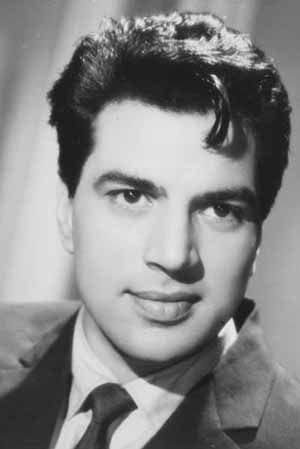
Dharmendra: The He-Man of Bollywood — A Life Between Stardom and Scandal

By TN Ashok. New Delhi , INDIA : November 26, 2025.

When news broke on November 24, 2025 of Dharmendra’s passing at age 89, the film world mourned the end of an era. What died with him was not just one of Hindi cinema’s most recognisable macho icons — a man whose muscular frame, easy charm, and rare versatility made him a box-office draw for decades — but also a living saga of love, ambition, family, and conflicting loyalties. In many ways, his life played out like a Bollywood melodrama worthy of its own script: full of triumph, scandal, hidden pain, and final regrets.
💥 Rise of a Legend

Born Dharmendra Deol, he rose from modest beginnings to become one of Hindi cinema’s most bankable stars. Over a career spanning six decades and more than 300 films, he proved adept at everything from action to comedy to romance and tragedy.
 Among his most celebrated films are Sholay, Chupke Chupke, and Satyakam — yet he refused to be typecast. Whether delivering powerful dramatic moments or light-hearted comic relief, he transformed each role with an effortless magnetism. At a time when many actors remained stuck in rigid typecasts, Dharmendra stood out as a living bridge between eras and styles.

His status as a “macho romantic hero” — equal parts muscle, swagger and sensitivity — captivated a generation of female fans. In that sense he was Hindi cinema’s answer to global screen gods — a one-man phenomenon, intensely masculine and yet emotionally accessible.

🏡 The Deol Dynasty: Family, Fame, and Fracture
Central to Dharmendra’s legacy is the large, sprawling family he created — six children from two marriages, and a cinematic dynasty that still resonates through Bollywood.
First Marriage — Groundwork for Legacy
At 19, long before stardom found him, Dharmendra married his childhood betrothed Prakash Kaur in 1954. With her, he had four children:
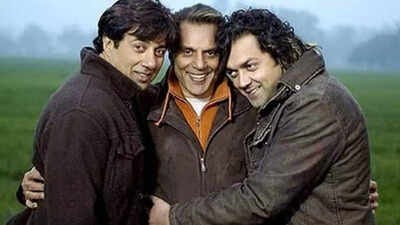
Sunny Deol — the eldest son, who went on to become one of India’s top action stars with blockbusters like Ghayal, Border and Gadar.
Bobby Deol — second son, who found fame in the 1990s with films like Gupt, Soldier, Humraaz; after a lull, made a strong comeback with hits like Animal and the web series Aashram.
Two daughters, Vijeta Deol and Ajeeta Deol — both opted for privacy over limelight. Vijeta reportedly works as a director at a private firm; Ajeeta lives in California, leads a quiet life, far from the glare of cinema and tabloids.
By the time his film career took off, this first family had already become his anchor — even as his star grew, Prakash Kaur stayed largely out of public view, refusing to be swayed by glamour or scandal. As a profile once summarised, she never chased attention — she simply held the family together.
Second Marriage — Stardom, Controversy and Compartmentalisation
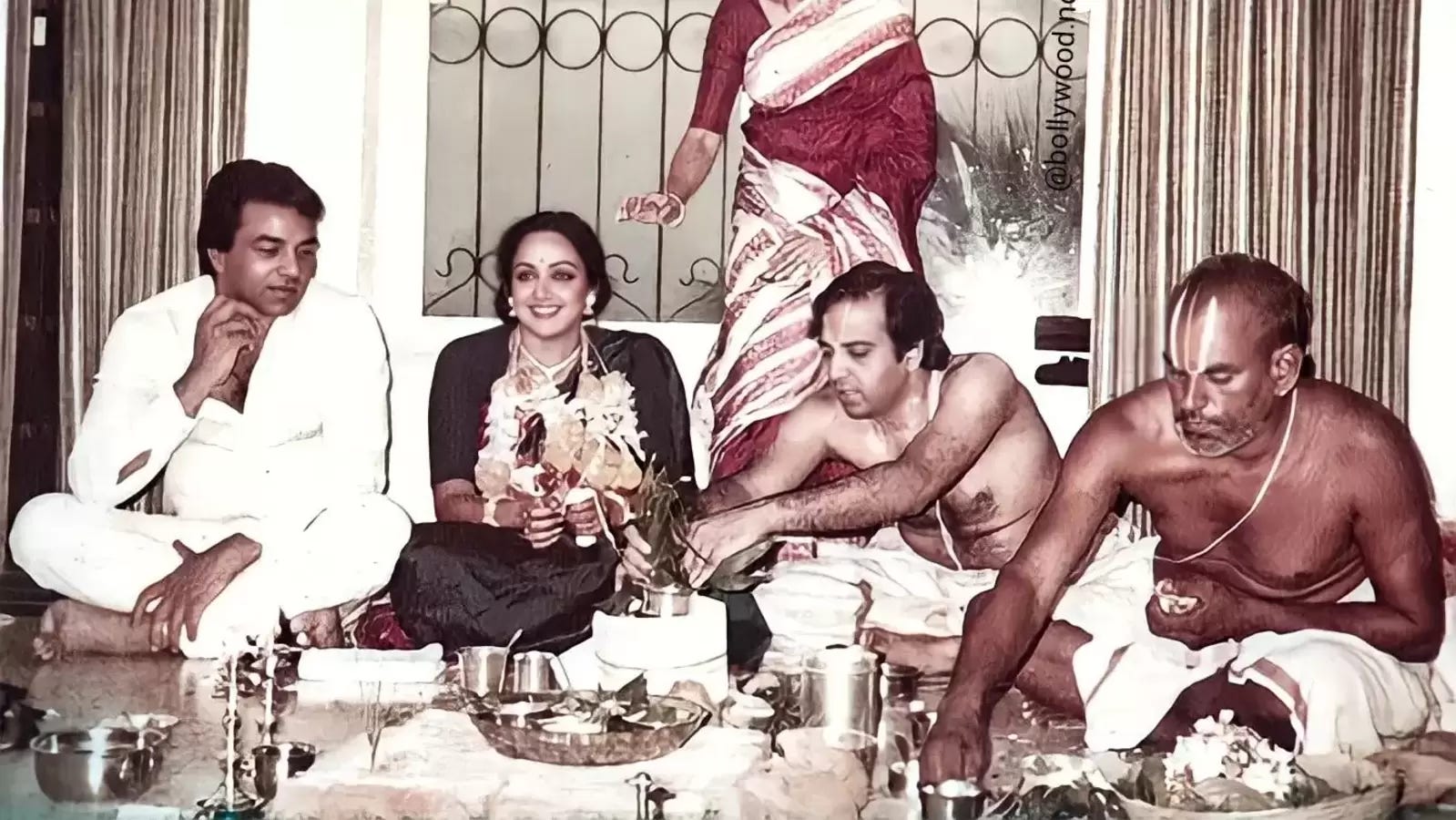
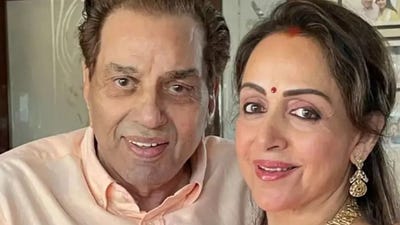
In the early 1970s, on the sets of films like Tum Haseen Main Jawaan, Dharmendra met co-star Hema Malini — their on-screen chemistry crackled, and soon that bubble of celluloid spilled into real life. Amid widespread gossip and tabloid frenzy, they married in 1980 — even though Dharmendra remained legally married to Prakash Kaur.
 The union drew parallels then — and over time — to celebrity double-lives made famous in Hollywood. The comparisons to the tempestuous and tabloid-famous affair between Elizabeth Taylor and Richard Burton were never far from public imagination: two glamorous stars, scandalous marriage, divided loyalties, complicated morality.
 Dharmendra’s solution was to lead two parallel lives — a home in Khandala with his first wife and children; another, more secluded, world with Hema Malini and their two daughters: Esha Deol (born 1981) and Ahana Deol (born 1985).

Perhaps the most telling detail: even decades after the second marriage, Dharmendra reportedly continued to live primarily with Prakash Kaur — a fact confirmed fairly recently by his son Bobby.

🌱 The Next Generation: Sons, Daughters — and What They Chose

As the Deol legend expanded into a dynasty, different children charted very different paths.

Sunny Deol carried forward the “Deol action hero” tradition — intense, muscular, patriotic roles that resonated with a generation. His career has spanned 100-plus films, and through his sons (grandchildren of Dharmendra), the legacy continues.

Bobby Deol, after early success, went through a slump — but revamped his image later with gritty roles and came back into public focus. Thanks to the tele serial Ashram by noted director Prakash Jha he regained audiences with his puzzling role as a con artistst turned fake godman.
Meanwhile, the daughters — especially from the first marriage — shunned the limelight:
 Vijeta Deol leads a private life in Delhi, working in business.
Ajeeta lives abroad, far from glamour, pursuing a private life.
&f=1&nofb=1&ipt=d6ed676ae3442c16b2d1124fb5c0b770031f3158883ce64e6af0efe7010d8aab)

From his marriage with Hema:


Esha Deol did try to follow in her parents’ footsteps. She debuted in early 2000s, but despite initial promise the “next-gen Deol dream” never fully caught fire. Her career sputtered; she married, had children, and eventually bowed out quietly from mainstream stardom.

Ahana Deol — trained in classical dance, like her mother — remained largely behind the scenes. She married a businessman and has children, but never courted public attention or film fame.
.jpg&f=1&nofb=1&ipt=13d787593c91b574f03d10760b05c23b93cf129e1ec953d1298a78682e4e1f41)

Thus, while the Deol name lives on, the magic — muscular heroism, box-office draw, cinematic charisma — has proven hard to replicate.
❤️ Love, Scandal & Segregated Lives — A Bollywood-style Marriage

In later years, interviews revealed the pragmatic acceptance of this unusual arrangement. Hema Malini once recalled (in an interview) that the arrangement “happened automatically” and that she had to accept it for her children’s sake.
 Meanwhile, among Dharmendra’s children, the emotional geography was complex. It reportedly took nearly 30 years for Esha — the daughter of the second marriage — to meet her father’s first wife, Prakash Kaur.
When Esha did meet her half-mother, it was a symbolic moment: humility and reconciliation, a quiet acceptance of complicated realities. In her own words, she touched her feet and was blessed.
Throughout, the bonds may have been distant, compartmentalised — but not devoid of respect. The Deol family’s public image remained of a clan that, despite extraordinary complexity, refused to implode into spectacle.
🎬 The Shadow of Hollywood: Parallels with Taylor-Burton
.jpeg&f=1&nofb=1&ipt=023490269134286ae32a7b2382198e1dc6c849d2f833885996572464485e7aa6)
The life Dharmendra led off-screen bore uncanny resemblance to those tabloid-famous Hollywood marriages. Like the globetrotting, scandal-ridden romance of Elizabeth Taylor and Richard Burton, his union with Hema Malini was as much about passion as it was about public drama. Two stars. Two households. Endless speculation. And yet a marriage that “worked” — for decades.

Like Taylor and Burton, Dharmendra and Hema never shared a traditional home. Their love existed in the flicker of film sets, separate bungalows, co-parenting across invisible boundaries. In that sense, their marriage was less a merging of households and more a fragile, long-term truce between two worlds.

But unlike the tragic, destructive spiral of many Hollywood romances, theirs matured into a quieter equilibrium. As decades passed, the scandal cooled, the gossip faded, and what remained was an uneasy yet functional coexistence — a testament perhaps to Dharmendra’s grounding ties to his first family, and to Prakash Kaur’s dignity and restraint.

✨ Final Act: Legacy, Loss, and Reflection

As the headlines reflect now, Dharmendra passed away at 89, leaving behind two wives, six children, 13 grandchildren — and a legacy no less dramatic than a film plot.
In remembering him, one recalls a man who could lift off in a baritone laugh, deliver heartbreak, dance, fight, romance — all with equal conviction. A man whose biceps and soft eyes defined an era of Hindi cinema. A man who built a dynasty of stars and survivors.

Yet his life was also a quiet reminder: that fame does not erase complexity, that love does not always follow neat lines, and that even the icons of celluloid are bound by the messy contours of human relationships.
If Hollywood once romanticised broken marriages between giants, Bollywood realised one: with Dharmendra, Hema, the children, the un-photographed half-sisters and forgotten daughters — all playing parts in a real drama that outlasted the cameras.
In that sense, Dharmendra’s story will outlive him: not just in reels of film, but in every whispered memory — of love that broke convention, of family that held together against odds, and of a legacy that refused to fade.
More on Dharmendra’s demise and legacy.
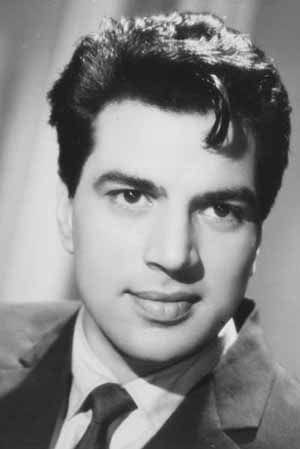
The “Unsung” Grandmaster of Versatility
Dharmendra’s career, spanning over six decades and more than 300 films, reads like a masterclass in versatility. From suave romantic hero to rugged action-man, from subtle drama to breezy comedy — he did it all, often with effortless ease.
Critics and contemporaries often note that despite acting “in nearly 250 films and delivering celebrated performances,” he never won the coveted Best Actor trophy at Filmfare Awards. Instead, the magazine offered him a Lifetime Achievement Award (in 1997) — a gesture widely seen as inadequate for someone of his breadth.
What makes this omission especially poignant is that his greatest performances were often in films that combined moral complexity and emotional honesty — roles far removed from the glamor or melodrama that typically draws awards. His role in Rajinder Singh’s Satyakam as an uncompromising civil engineer who will not give into corruption at the cost of his personal psyche and eventually the loss of his job was brilliant but went unrewarded.
His Magnum Opus: The Films That Defined His Range

 While selecting only a handful from his vast oeuvre is unfair — yet some standout films demand mention. Among them:
Satyakam (1969): Perhaps Dharmendra’s most powerful and “actor’s actor” performance. As Satyapriya — a principled idealist struggling with integrity and disillusionment — he infused subtlety, moral conviction and inner conflict. The film itself won the National Award for Best Hindi Feature. But the protagonise on whom rested the film , was unjustifibly denied an award that merited his performance.

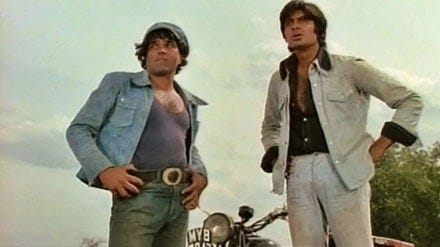
Sholay (1975): As Veeru, the lovable rogue with a heart, Dharmendra balanced macho bravado, genuine vulnerability, humour, and emotional depth. The film became a cultural phenomenon — and his chemistry with his co-stars, his timing, swagger, brokenness in moments of grief — made Veeru evergreen.

Chupke Chupke (1975): In a comic avatar — as the charming, witty professor Parimal Tripathi turned driver — he showed that beneath the “He-Man” body lay a nimble, lightly comic performer who could hold his own in intellectual comedy. His rapport with co-stars, subtle expressions and timing signalled a different side of his talent.

Alongside those, films like Phool Aur Patthar (1966) — where he played a conscience-led man grappling with harsh realities — and Seeta Aur Geeta (1972) — romantic, comic, sentimental — showcased his ability to shift genres gracefully.
In other words, Dharmendra could convincingly do the sensitive idealist, the lover, the tough guy, the humorous professor — sometimes all in a single year.
A Career of Hits, Flops — and Enduring Stardom

Numbers tell part of his greatness:
Over 300 films across seven decades.
According to one tally: 94 of his films recovered investments, 74 counted as “hits”, including 7 blockbusters and 13 super-hits.
Another reckoning states he delivered more “hits” than many of his contemporaries — even stars now regarded as legends — yet seldom got the billing of “superstar.”
 He was also remarkable for longevity: even when many actors fade after a decade or two, Dharmendra adapted — shifting from lead-hero roles to character roles — yet managed to headline or contribute meaningfully to box-office successes across decades.
 At his peak, some years saw him deliver an unprecedented number of hits back-to-back; at times he juggled multiple films a year and still maintained a high success rate.
 And it wasn’t always smooth — like any mainstream actor, he had flops. But what distinguished him was the ability to bounce back, shift gears, and remain relevant even as cinematic trends changed drastically.
Heroines, Chemistry & On-screen Bonds
 Dharmendra’s co-stars read like a who’s who of golden-age Bollywood. He paired with many leading ladies. Notable among them:
Hema Malini —their on-screen rapport offered memorable hits (for instance, “Seeta Aur Geeta”, “Sholay”), and their real-life relationship would later become widely talked about.


Sharmila Tagore — in films like “Chupke Chupke”, where his chemistry with her added warmth, ease and charm to the comedy.
Beyond that, over decades he worked with a rotating cast of heroines and co-stars — romantic, comic, dramatic — adjusting his style to suit the film’s mood.

This adaptability helped him stay relevant: as cinematic sensibilities changed, as female leads evolved, he found synergy with emerging actresses as well as established ones.
Why Awards Eluded Him, Yet Legacy Lingers

It is perhaps the cruelest irony of cinema that someone so wide-ranging, so assured, and so successful as Dharmendra was never honored with a major Best Actor trophy at Filmfare — despite performances in moral-weighty films like “Satyakam”, cult-classics like “Sholay” and beloved comedies like “Chupke Chupke”.
Part of the reason could be the industry’s tendency to pigeonhole — Dharmendra was often seen as the macho action-hero or the charming lover-boy, and perhaps his nuanced performances were overlooked in favour of more “traditional” dramatic actors. Critics at the time argued that his “good looks and easy charm led many to overlook his depth as a performer”.
Yet, decades later, his films speak louder than any trophy ever could. Younger generations rediscover his movies; his dialogues, style, warmth, and screen-presence remain evergreen.
Personal Life: Two Marriages, A Family, A Legacy
Off-screen too, Dharmendra led a life that captured public fascination. He remained married to his first wife, Prakash Kaur, and later married Hema Malini — a decision that stirred gossip and controversy, but he managed to sustain both relationships and maintain public affection.
He emerged as the patriarch of a film dynasty — with children who continued the acting tradition. But more than lineage, what truly mattered was that the man’s stardom never faded: even in his later years, he kept working — taking on character roles when leading-man glory was past — and showcased that real stardom isn’t just about youthful looks, but about enduring presence, adaptability and passion.
Final Word: Enduring, Unshakeable — The He-Man Forever
 In the pantheon of Hindi cinema stars, Dharmendra stands apart — not because he collected awards (he didn’t, at least the major acting ones), but because he built something far more lasting: a legacy of versatility, charm, emotion, and connection. He proved that a hero need not always be invincible; sometimes he could be vulnerable, conflicted, funny, romantic — all in one film.
 He was the rare mainstream actor who successfully straddled action, romance, comedy and drama across decades, maintained box-office muscle even amid changing tastes, sustained real-life relationships, and elevated ordinary films with sheer charisma.
Dharam-Gharam as he was sobriquoted as a testimony to his maniliness and macho symbol , the audience and filmdom and many women fans will lose the gharam of the dharam that has turned stone cold. The family orchestrated his funeral in the most dignified manner and declined it turn it into a spectacle like other star cremations.


Comments
Post a Comment