India's claim to strategic soverignty will come into question when Russian President Vladimir Putin visits India Dec 4th - No new defence contracts to be intialled - Yet feathers will rustle in Washington if India commits to continue to buy Russian oil as funds funnel the Ukraine War

Russian supremo Putin visits India from Dec 4th representing significant global realignment
The globe watches with curiosity and anxiety Russia President Putins visit to India Dec 4th rewriting global realignment of forces that that threatens further strains in Indo_US relations cornering it


Putin’s Delhi Visit: A High-Stakes Balancing Act Between Moscow, Washington, and Beijing
By TN Ashok. Nov 30, 2025
An analysis and future perspective of India’s relations with US as Putin’s visit and outcomes could reshape India’s soverignty 1st policy and redefines its relatins with US and Europe.

An Investigation Into How Russia’s Presidential Visit Could Reshape India’s Strategic Calculus Amid Escalating US Tensions and Chinese Scrutiny
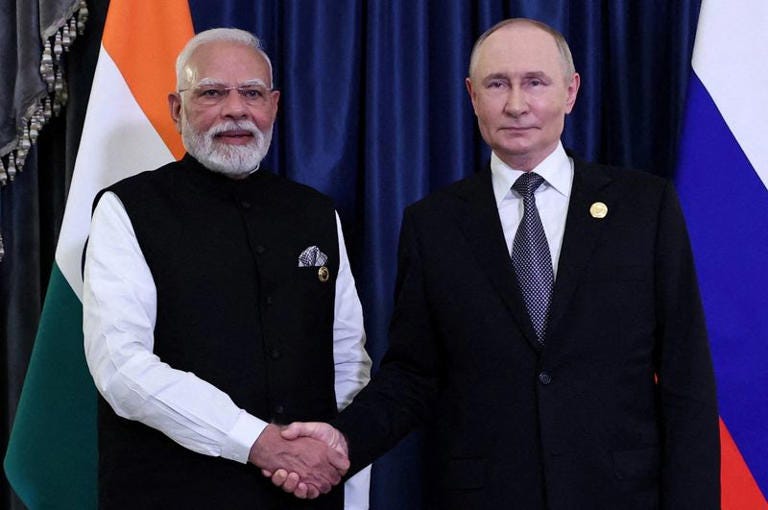
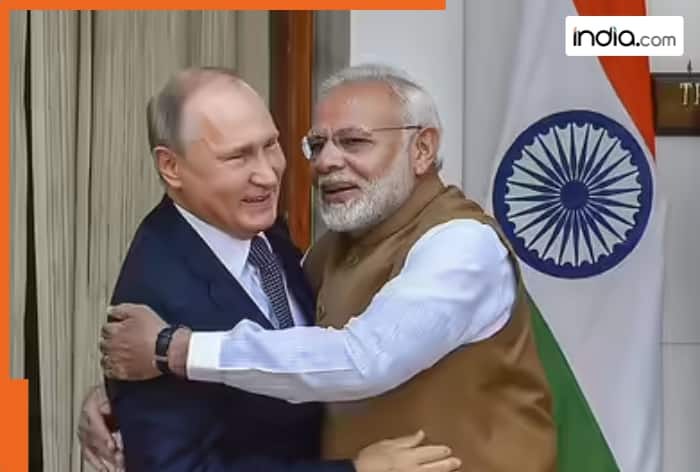
NEW DELHI — When Russian President Vladimir Putin arrives in India’s capital on December 4 for the 23rd India-Russia Annual Summit, he will bring more than proposals for weapons systems and energy contracts. The visit represents a pivotal moment in global realignment, one that could determine whether India maintains its celebrated strategic autonomy or finds itself pushed deeper into geopolitical camps it has long sought to avoid.
The timing is hardly coincidental. Putin’s first visit to India since the Ukraine invasion comes as the relationship between New Delhi and Washington has deteriorated to its lowest point in decades, with President Donald Trump imposing punitive tariffs reaching 50 percent on Indian goods—partially as punishment for purchasing Russian oil. Meanwhile, Beijing watches carefully as two of its most important partners navigate their own complex relationship, one that carries implications for China’s strategic positioning in Asia.
The Energy Equation: Russia’s Lifeline, India’s Dilemma
At the heart of discussions will be a subject that has become the defining issue of India-Russia relations in the post-invasion era: oil. Russian crude now supplies around 35 percent of India’s total oil imports, with discounted oil helping India moderate inflation and protect foreign-exchange reserves since 2022. Bilateral trade surged from $13.1 billion in FY 2021-22 to $68.7 billion in FY 2024-25, driven almost entirely by energy flows.
For Russia, India’s purchases have been an economic lifeline. As European markets shut down and Western sanctions intensified, Asian buyers—particularly India—absorbed Russian crude at deep discounts. Indian refiners benefited by approximately $12.2 per barrel compared to Brent benchmark prices, generating estimated savings between $10.5-25 billion during 2023-2024.
Yet this arrangement now faces existential challenges. US sanctions on Russian companies Rosneft, Lukoil, and their subsidiaries took effect on November 21, 2025, forcing Indian refiners to cut December purchases to their lowest in three years. Major buyers including Reliance Industries, HPCL-Mittal Energy, and Mangalore Refinery have already halted or dramatically reduced Russian imports.

The pressure campaign appears partially successful. Five of India’s major refiners placed no orders for Russian crude for December deliveries, marking a significant change for the world’s third-largest oil importer. Trump has repeatedly claimed that Modi promised to scale back crude purchases, though Indian officials maintain that energy security remains a sovereign decision.
 Putin will likely press Modi for assurances on continued energy cooperation and alternative payment mechanisms. Creating alternative payment and insurance mechanisms, including LNG and LPG expansion, upstream investment, dedicated shipping lines, and rupee-ruble settlement systems, is expected to form the centrepiece of negotiations. For Moscow, stabilizing this revenue stream is critical; for Delhi, the question is whether long-term economic benefits justify escalating tensions with Washington.
The Defense Dimension: S-400s, Su-57s, and Strategic Signaling
Beyond energy, the summit will focus on defense cooperation—the bedrock of India-Russia ties for six decades. India seeks to procure five additional S-400 air defense regiments beyond the five already contracted. The S-400 system’s reported effectiveness during Operation Sindoor has increased India’s interest in additional procurement, with the final units from the original $5.5 billion 2018 contract expected by 2026-27.
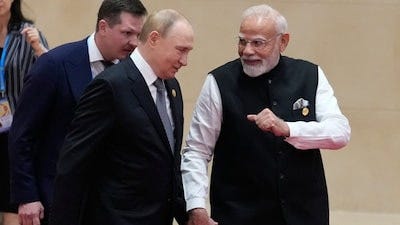
More significantly, discussions will advance around the Sukhoi-57 fifth-generation stealth fighter. Russian Ambassador Denis Alipov stated that both sides were conducting intensive work on the Su-57E platform, with Russia prepared to offer unprecedented localization. The proposal includes technology transfer enabling production at Hindustan Aeronautics Limited’s Nashik facility—mirroring the successful Su-30MKI program that produced over 220 aircraft.

The plan envisions an initial purchase of 36 to 40 aircraft forming two frontline squadrons, followed by comprehensive technology transfer for local production, potentially expanding to seven squadrons equivalent to 120-140 jets. This would represent one of the largest international Su-57 procurements outside Russia itself.
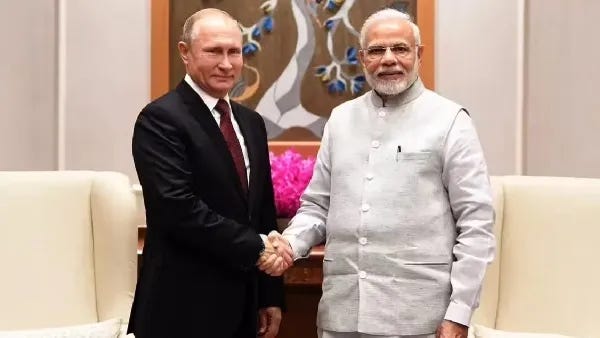

The proposal carries both technical and political weight. Russia’s willingness to share source code and sensitive technology stems from its need to maintain strategic ties with India amid Western sanctions and a shifting global arms market. For India, the offer demonstrates that Moscow remains willing to transfer cutting-edge technology that Washington has consistently refused to provide.
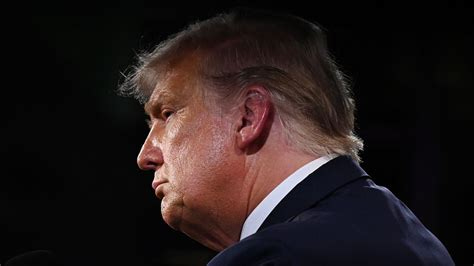
Yet significant obstacles remain. Payment mechanisms for multi-billion-dollar transactions remain unclear amid sanctions. The threat of CAATSA sanctions looms, though expectations of reduced enforcement under Trump may provide breathing room. And India’s own indigenous Advanced Medium Combat Aircraft program, expected around 2035, raises questions about long-term Su-57 utility.
 The Washington Problem: Mission 500 or Mission Impossible?
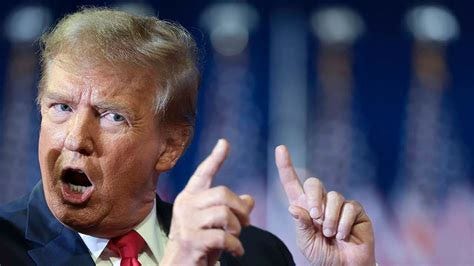


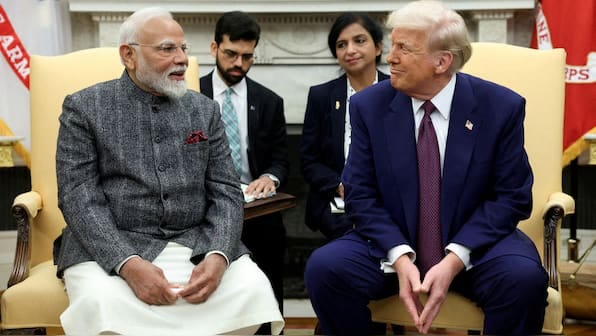
 Putin’s visit occurs against the backdrop of the most serious India-US crisis in modern history. In February, Modi and Trump announced “Mission 500”—a plan to expand bilateral trade to $500 billion by 2030. By August, Trump had imposed a 25 percent reciprocal tariff plus an additional 25 percent penalty for Russian oil purchases, bringing total duties to 50 percent.
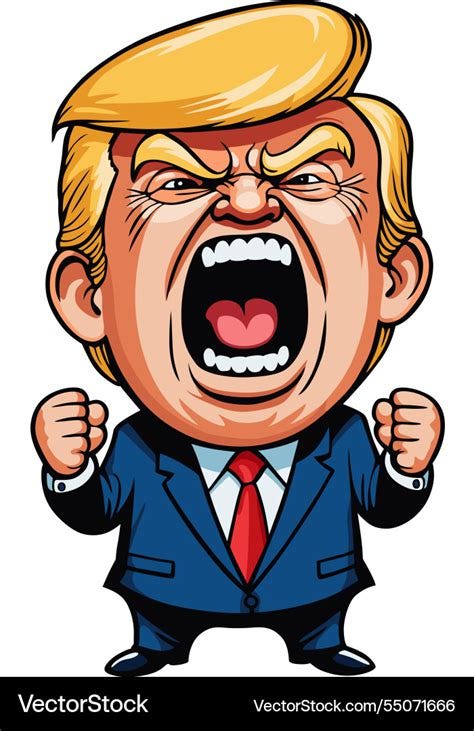
India strongly denounced the measures as unfair, unjustified and unreasonable, asserting that its energy policy and supply chains are independent and grounded in its strategic autonomy. The crisis deepened when reports suggested India paused major defense procurements from the US—claims the Defense Ministry denied.
Trump was particularly disturbed that while China increased Russian oil imports for its own use, India was reselling refined Russian oil products to Europe and elsewhere for a healthy profit. This revelation transformed what Trump viewed as an economic betrayal into a strategic affront.
The diplomatic rupture extended beyond trade. Trump’s repeated claims of brokering an India-Pakistan ceasefire in May—publicly rejected by New Delhi—revived sensitivities about external interference and exposed divergent narratives that complicate trust.

Former US Ambassador Kenneth Juster and journalist Fareed Zakaria characterized Trump’s actions as reversing decades of bipartisan efforts to strengthen ties with India. Zakaria noted that India was placed in the highest tariff category alongside countries like Syria and Myanmar, while Pakistan received lower tariffs despite its close ties with China.
The timing of Putin’s visit sends an unmistakable message: India possesses alternatives. The outcomes of Putin’s visit will be as much about sending a signal to the United States as about assuaging domestic concerns that India will not buckle under pressure from Trump.
The China Factor: Watching From the Sidelines
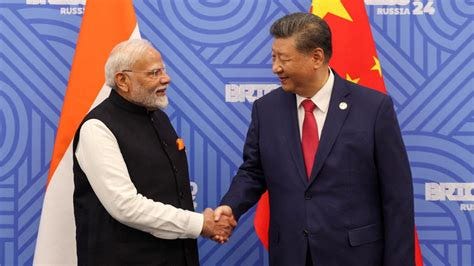
Beijing’s reaction to the Putin-Modi summit will be measured but significant. As Russia’s most important strategic partner and India’s primary regional rival, China has complex interests in this triangular relationship.
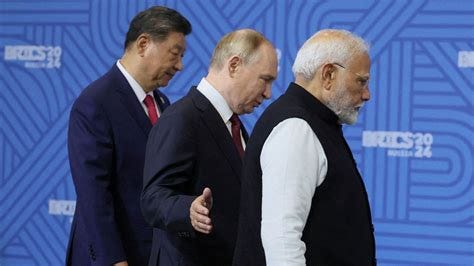
At the Shanghai Cooperation Organization summit in September, Modi was pictured in friendly discussion with Putin and Xi, with the optics unmistakable—China, India, and North Korea backing Russia as a changing global order takes shape. Yet beneath surface-level unity lie deep fault lines.
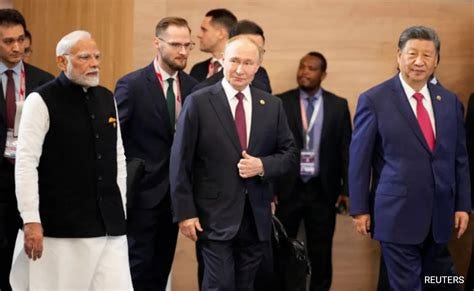
Differences between Russia and China are evident in their engagement in each other’s periphery, with Russia’s deepening security relationship with North Korea marking a qualitative shift to the detriment of Beijing’s influence. Meanwhile, the visit sends a strong message to China that India maintains independent strategic ties beyond its US partnership.
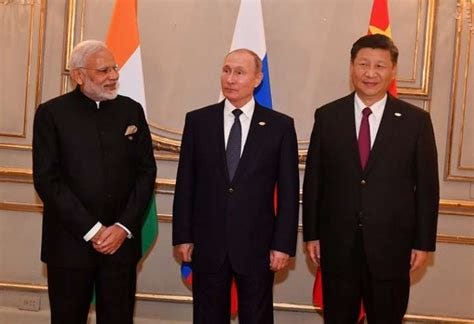
For Beijing, Putin’s India visit represents both opportunity and concern. Closer Russia-India defense cooperation could complicate China’s military calculus along the Himalayan border, where tensions remain high. Yet Trump’s trade war with India potentially pushes New Delhi closer to Beijing’s orbit within BRICS and the Shanghai Cooperation Organization—an outcome China would welcome.
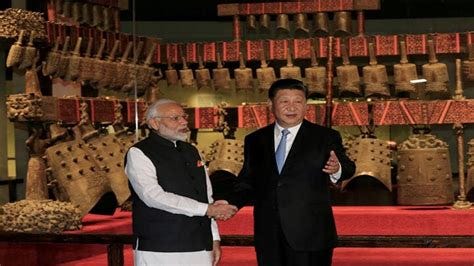
Harsh Pant of the Observer Research Foundation noted that Trump’s policies are accelerating a process whereby India seems to be working much more closely with China and Russia to push back against economic unilateralism from the US. This trilateral coordination, however tentative, represents exactly the kind of anti-hegemonic coalition Beijing has long sought to cultivate.
Strategic Autonomy’s Stress Test
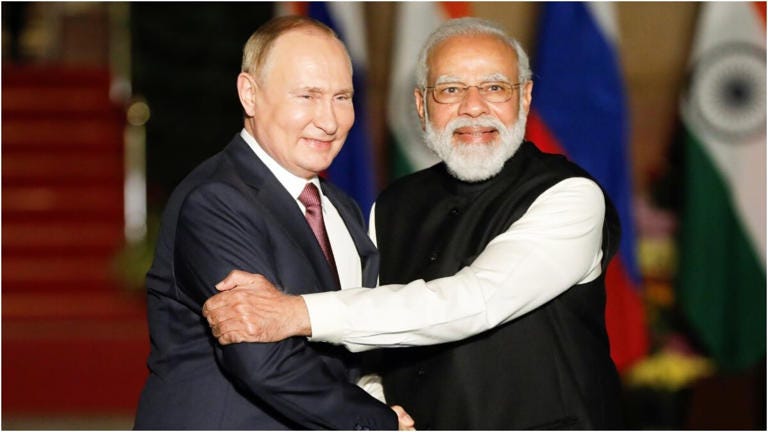
Putin’s visit ultimately represents a stress test for India’s doctrine of strategic autonomy—the principle that New Delhi maintains independent relationships with all major powers without subordin
ating itself to any bloc. This approach enabled India to purchase Russian weapons while deepening defense ties with Washington, to criticize aspects of US policy while accepting billions in trade, and to manage border tensions with China while participating in BRICS.
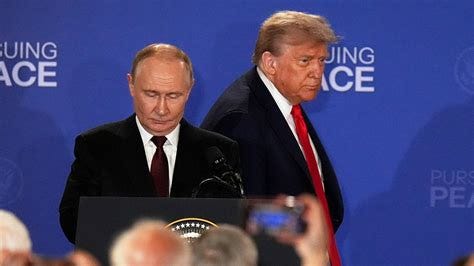
The summit reinforces that strategic autonomy is an operational doctrine, not a slogan, countering the perception that US tariffs, sanctions threats and repeated public reproaches have constrained India’s foreign-policy space. The signaling is deliberate: India will not calibrate national security architecture or energy security around Washington’s domestic politics.
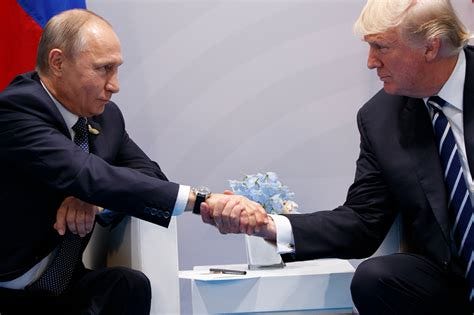
Yet autonomy has costs. Closer Russia ties risk CAATSA sanctions and technology denial from the West. Reduced Russian oil purchases risk inflation and foreign exchange pressures. And navigating between Washington, Moscow, and Beijing requires diplomatic dexterity that becomes harder as great power competition intensifies.
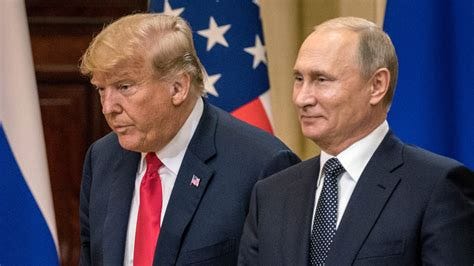
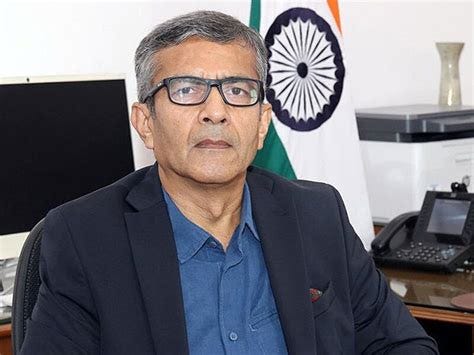
Defense Secretary Rajesh Kumar Singh has indicated that no contracts will be signed during Putin’s visit—talks will focus on broader cooperation and addressing delivery delays rather than concluding new deals. This measured approach reflects India’s recognition that the geopolitical environment remains fluid.
Conclusion: High-Stakes Diplomacy
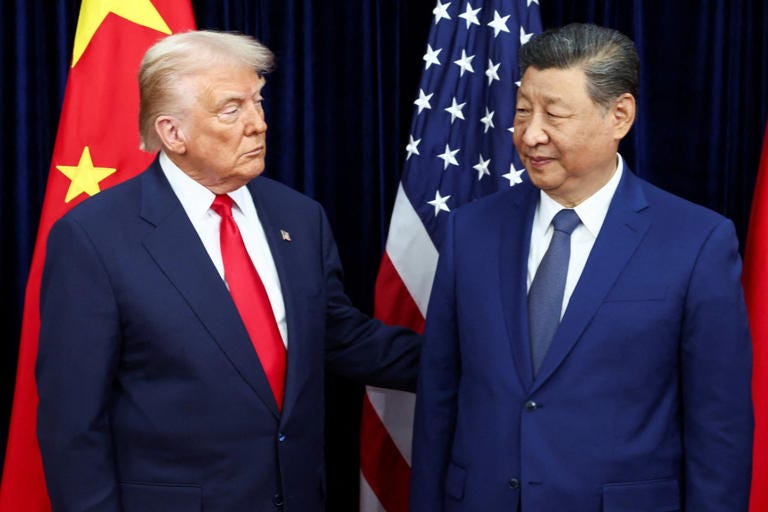
Putin’s December visit to Delhi is far more than a routine bilateral summit. It represents the culmination of tectonic shifts in global power arrangements, with India positioned at the intersection of competing visions for international order.
For Russia, the visit offers validation that Western isolation has failed and that Moscow retains meaningful partnerships beyond China’s shadow. For India, it demonstrates continued access to critical defense technology and discounted energy while signaling to Washington that New Delhi has options. For China, it presents both the prospect of Russia-India cooperation that limits Beijing’s influence and the opportunity to draw India closer through shared grievances against US policy.

The ultimate question is whether India can maintain its balancing act—securing benefits from all sides while avoiding commitments that constrain future flexibility. As great power competition deepens and demands for alignment intensify, strategic autonomy faces its greatest test.

When Putin and Modi meet on December 4, they will be negotiating not just weapons systems and oil contracts, but the very architecture of India’s place in a fragmenting world order. The decisions made in those rooms will reverberate far beyond South Block, shaping geopolitical alignments for years to come.
The outcome remains uncertain, but one thing is clear: in the new era of multipolarity, India’s choices matter—to Moscow, to Washington, to Beijing, and to the future of global power itself.


Comments
Post a Comment